
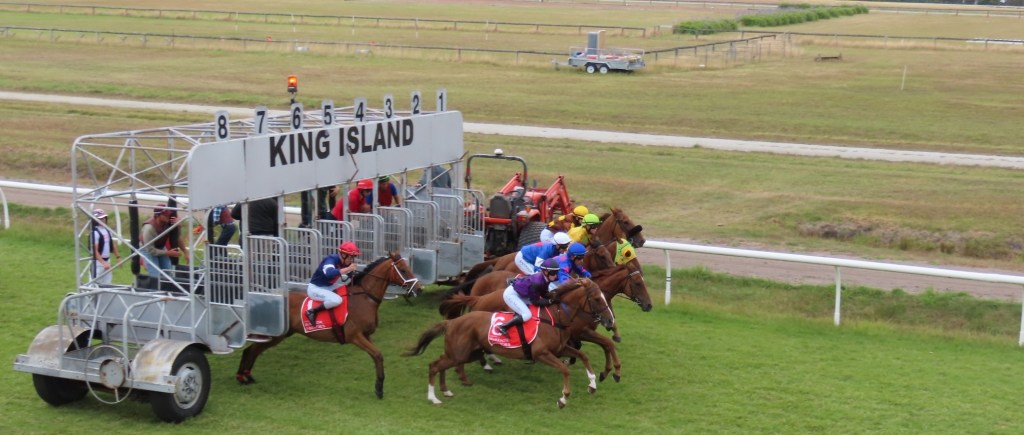
On King Island, racing has always been more than a sport. It’s a thread that stitches together a remote community, a summer ritual that brings locals, visitors, horses, and heartbeats into the same small patch of turf. And after months of uncertainty, that thread tightened again this week.
The King Island Hotel was buzzing yesterday — not with the usual holiday chatter, but with something rarer: optimism. The King Island Racing Club had called a meeting, hoping for support. What they got was a room full of people who weren’t ready to let the island’s racing tradition fade.
“The numbers were very healthy — better than we thought we would get,” club president Audrey Hamer said, still sounding a little surprised. For a club that has weathered storms — logistical, financial, and emotional — the turnout felt like a turning point.
Horse numbers, once the biggest concern, are climbing. “We’re still looking for more thoroughbreds,” Hamer said, “but we believe we’re in the high twenties at the moment.” And in a welcome twist, a South Australian harness trainer has expressed interest in bringing a team of eight pacers across the water.
For a place as isolated as King Island, every horse matters. Every trainer matters. Every hand that helps saddle up on a windy Saturday afternoon matters.
A Racing Season With Its Own Rules
The island’s racing conditions remain unique — a necessity shaped by its size and its spirit. Thoroughbreds must have won no more than $12,500 in first‑place prizemoney, though placed earnings don’t count. Harness horses are capped at six lifetime wins. It keeps the competition fair, the fields even, and the racing honest.
The Challenge of Distance
Distance has always been King Island’s greatest adversary and its greatest charm. The club is working to secure sea transport from Port Welshpool in Victoria, while Tasmanian horses can travel via the twice‑weekly service from Stanley. It’s not simple, but nothing about racing on King Island ever has been.
Accommodation is another hurdle. The racing season overlaps with the island’s busiest holiday period, leaving beds scarce. The club is encouraging trainers to bring caravans, RVs, or camping gear — a small inconvenience for the chance to be part of something special.
And then there’s the workforce. “We don’t have a lot of track riders on the island,” Hamer said. It’s a reminder that King Island racing relies on people who are willing to pitch in, adapt, and help each other.
Support That Makes a Difference
TasRacing has stepped up with meaningful support:
- $600 travel subsidy per horse
- $3,400 prizemoney for each thoroughbred race
- $3,600 for each harness race
The club is adding its own incentive — a $2,000 bonus for every horse that stays the full season. Even if circumstances force an early departure, connections will still receive a proportion of the bonus.
TasRacing officials are expected to visit the island soon to help shape the 2026/27 program. It’s another sign that the wider industry understands the value of keeping King Island racing alive.
A Community That Refuses to Let Go
For all the logistics, subsidies, and programming discussions, the heart of the story is simple: King Island wants its racing season. The community wants it. The trainers want it. The club wants it.
And after yesterday’s meeting, it feels within reach.
For trainers, owners, and supporters wanting to be part of the 2026/27 season, the club is ready to help. Enquiries can be made via kingislandracingclub@gmail.com or through the club’s Facebook page. Sponsorship opportunities are also open.
On an island where racing has always been a lifeline — a summer heartbeat — the signs are good. The spark is back. And with it, the promise of another season where horses thunder down the straight, families gather at the rail, and King Island once again becomes the little racing miracle in the middle of the bass straight.
 AT THE BARRIERS Tasmania
Leave a comment