
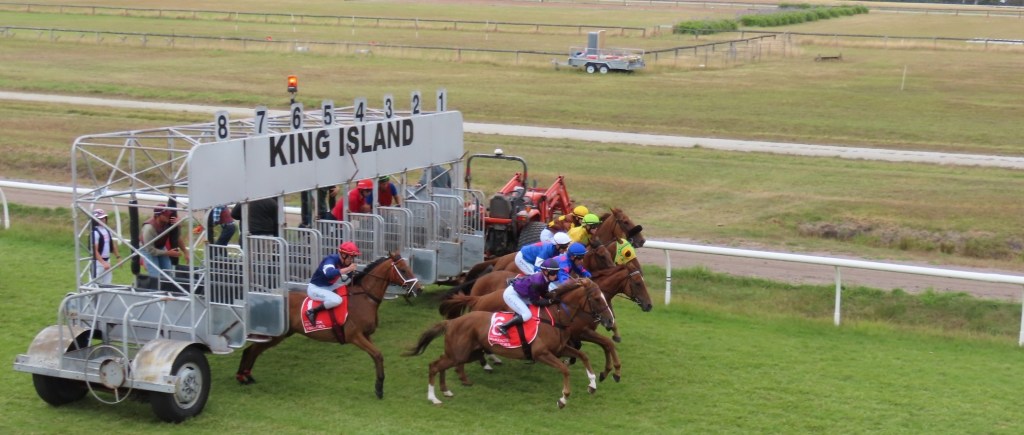
King Island’s hopes of reviving its famous summer racing season have been dashed, with the 2026/27 program cancelled after insufficient horses were committed to the island.
Despite an enormous amount of work by King Island Racing Club president Audrey Hamer and her committee, the numbers simply weren’t there to satisfy the requirements set by Tasracing for the proposed seven-meeting season.
Under Tasracing’s conditions, each King Island meeting needed to comprise at least five races, with a minimum of five acceptors required for each race to proceed.
The club was able to attract commitments for just 21 thoroughbreds and two pacers from the small group of trainers prepared to support the season — well short of the approximately 30 horses required to give the seven meetings a realistic chance of proceeding.
It is another bitter blow for a club desperately trying to preserve more than a century of racing tradition on the island.
Tasracing had put forward a support package that included up to $25,000 in additional subsidies, on top of the existing $600-per-horse freight allowance. The package replaced the enhanced prizemoney model used in previous seasons.
Hamer told ABC Radio the club did not receive confirmation of Tasracing’s support until July 15, leaving volunteers with little more than two weeks before the July 31 deadline for expressions of interest from Tasmanian and mainland trainers.
“We only received the support from Tasracing on July 15 and we are all volunteers here,” Hamer said.
“It left little time to get sponsorship, organise stabling for visiting horses and things that need to be done.”
The timing raises an important question about whether the club was given a realistic opportunity to make the season work.
The King Island committee had been forced to wait for Tasracing’s budget process to be completed. While that budget was handed down in May, confirmation of support for King Island did not arrive until weeks before trainers were required to commit.
For trainers considering sending horses to the island for an extended summer campaign, decisions surrounding transport, accommodation, staffing, stabling and the suitability of horses cannot always be made at short notice.
Despite the setback, Hamer remains determined that the cancellation will not spell the end of King Island’s long racing tradition.
The club hopes to spend the next 12 months strengthening its position, including attracting additional sponsorship so it is not as reliant on waiting for Tasracing funding decisions before planning can begin.
There are also encouraging signs at a local level.
“One lady trainer on the island is upgrading her stabling to take up to six horses,” Hamer said.
“She will work on that upgrade before next season.”
That type of commitment gives the club something to build around, but the future of King Island racing cannot rest solely on the shoulders of a small band of volunteers and local participants.
If racing is to have a future on King Island, greater certainty is required much earlier.
Tasracing needs to make a decision on its support for the island well in advance of the season and include King Island meetings on the racing calendar early enough for trainers to properly plan their campaigns.
Waiting until the middle or end of July to provide certainty leaves the club facing an enormous task in trying to attract horses, trainers and sponsors while also organising the considerable logistics involved in staging racing on the island.
King Island Racing Club has demonstrated that it is prepared to fight for its future.
Now it needs certainty.
If Tasracing wants racing to continue on King Island, the commitment for the next season needs to come sooner rather than later — ideally now — giving the club, trainers and potential sponsors the time they need to make it work.
Otherwise, “going, going, gone” could become more than just the story of couple of back to back cancelled season.
 AT THE BARRIERS Tasmania
Leave a comment